



Y-DNA
Report for Descendants
of John Bennett (1624) of Virginia
Some of you, perhaps all of you, received an email from the Bennett Project administrator, Cindy Smith, pointing you to my introductory "letter" and initial report for the Wiveliscombe Bennetts. It also included a link to a much fuller report for the Blackwater Bennetts. And both include descriptions about my interests in your Bennetts. Still, briefly, I'm a descendant of Richard Bennett, Cromwell's parliamentarian governor of Virginia during a few years of the English Civil Wars. I've been doing genealogy for more 45 years and genetic genealogy, especially the Y chromosome, for 16 years. I'd become aware of Richard with my introduction to genealogy in 1976 but considered it work that was done. However, a lot of questions were raised years ago when I first started poking around at FamilySearch.org, some of the "data" obviously spurious. It's taken years to get a foothold in the Bennett DNA door, but here I am — ready for answers, as well as to provide some.
Because this report is rather long and freewheeling, here is a preview list of links referred to and discussed below.
Basic Y-DNA Information
Your Y-DNA haplogroup is called R1b-BY172987.
The popularization of personal Y chromosomal sequencing (thanks largely to FTDNA) is the greatest tool in genealogy since the onset of the internet. The reason is straightforward. Yet it seems a lot of people, especially those with some autosomal testing experience (23andMe, etc), have trouble reconciling Y-DNA with the common understanding of DNA. If that's the case, just let that go and start fresh. The Y is simply inherited in a very different fashion from the other chromosomes. The first and simple and hard-fast rule is that because it passes from father to all sons (no daughters) as a virtual clone — and has since the beginning of the species — distantly-related men will have the same markers — as well as a handful of other markers that later emerged separately, and quite uniquely, along their respective lineages. Those small differences are the key to determining paternal genetic branching, branching that happens to correspond with the genealogical branching of a surname. Autosomal matches can come down from any ancestor and, aside from the simple computer interfaces provided, can be difficult to track up the tree. With the Y, however, the pathway is predetermined — straight up the father line, and that to the absolute exclusion of any other biological or ancestral explanation. Somewhere, in that lineage of Bennett ancestors, will be the common ancestors you share with your Y-DNA matches, male cousins of virtually any degree. The biological strength of the Y is given even additional power in that surnames — at least in our culture — are usually passed down the same paternal path. (Genetics operates from a biological near certainty while surnames is dictated by social convention — sometimes.) In other words, surnames can "lie" but genetics never does (although the interpretation can sometimes be off).
I've been in touch with each of the group's two Big Y testers (also known as the Y-700). For those of you who don't know what those tests are, they sequence up to 15 million positions on the Y and map out everything that differs from the standard model of the human genome. These differences are known as markers, a more polite word substitute for mutations. Mutations are most famously found in genes (and Hollywood horror movies). Genes are strings of genetic letters that comprise the recipes for any of a large number of proteins, those mutations that can cause disease or the propensity for disease. Most such markers, however, simply code for specific traits, such as eye color. However, genes make up only 1.5% of the genome. The remaining 98.5% of it was once referred to as Junk DNA. But since the completion of the Human Genome Project two decades ago, geneticists are finding purposes for that former "junk". We now know, for example, that some of it turns genes on and off. And some of it, it turns out, were genes that were rendered dysfunctional by mutation. I'm not a geneticist, but I suspect those genes may not have served a critical purpose; otherwise, we'd have become extinct — or evolved into a completely different species. In fact, some have pondered whether the removal of some of these now archaic genes helped put us on course toward anatomically modern humans. Although I'm not a geneticist, I suggest that most of these genetic bases (properly known as nucleotides) serve as a protective barrier for our all-important genes, that stuff that really counts and makes us who we are. In any event, Y-DNA markers are the rhetorical needle in a haystack of the 57 million genetic points on the Y chromosome. For evolutionary reasons, mutations are rare events.
In point of fact, the Y chromosome is nearly all "junk" and has only about 70 genes that exist largely to support the male sex gene (SRY gene). They are needed for hormone production and for other needed proteins. This makes the "non-coding" mutations perfect for genetic genealogy. They do nothing malicious and tend to stick around, and each from the time of its inception as a modest mutation of no consequence. Furthermore, they accumulate throughout the generations. In this, they are silent witnesses to the history of the bearer's paternal lineage, and each marks an ancestor's birth, as it's at birth that they're introduced into the population. These mutations happen, on average, about once every four generations or once a century. Of course, keep in mind that that estimate can vary remarkably from one generation to the next. Still, it can be used as a sort of genetic measuring stick, if not a terribly accurate one. That will improve as more data comes along. But it's fine to start with the expectation of a defining marker about once every four generations. And these mutations do more than mark an individual's birth. They're encoded in the DNA throughout the lifetime of the lineage, passed down to every male generation since that birth, designating a new genetic branch on the tree, and ending up as an archival history hidden within the cells of each tester. But there's another arm to this study. What we're engaged in is called genetic genealogy. Well worked out genetic trees can be seen as the scaffolding on to which the more detailed genealogy hangs. In fact, genetics borrows words from the human world: parent SNP, sibling SNP, and child SNP. (SNP is defined below.)
John Bennett Y-DNA Results
Governor Richard Bennett's Y chromosome, for all practical purposes, died with his grandson, Richard Bennett III, who had no children. But, as just described, Richard's Y was a clone of his dad's, of his grandfather's, and was the Y chromosome of all their sons and of all their distant cousins and their male descendants. They can be mined for in living descendants. Following is a link to the standard report I use for the groups and projects I work with. Each chart is introduced on the page so there's no need to do that here. Instead, I'll discuss only the SNP tree, the second graphic down: Wiveliscombe Bennetts.
The acronym SNP refers to a particular kind of marker, a single genetic letter that has flipped from one of the four values (A, C, T, and G) to another. For example, the marker that presently defines your group of Bennetts, BY172987, resulted with a mutation at position 8605809 of the Y chromosome. A molecule of T (thymine) mutated to a molecule of C (cytosine), the former of which (T) is possessed by nearly any other man. Again, these mutations do not influence biological functionality. Instead, scientists have found that they are archival in nature and hold the patrilineal genetic history for an entire lineage, each marker emerging before the next. (Of course, the timeline is not recorded, but it can be inferred through testing the relevant populations.) Y-DNA sequencing is a useful tool in archaeology, physical anthropology, and population genetics (the grandfather of genetic genealogy). It's even used for historical purposes (witness Carpark Richard). And it's those markers that are represented in your SNP tree at the above page. (Not mine, by the way! I have a rare set of Cooley Y-DNA markers.)
As so often happens, this Bennett group is starting out with a large collection of 35 SNPs at the top of the tree. Per an overly simplified formula, they represent 35 male individuals, each a descendant of another, that emerged over the course of about 3500 years. My R1a-YP4248 Project (which includes my Cooleys) also started with a large YP4248 haplogroup likely not much more than a thousand-plus years old. We now know mine is of Scandinavian origin and likely arrived in England with two groups of related Vikings. We've been testing for a several years and presently sit at 33 Big Y testers. That testing has broken the original block into a great many chunks. How that happens is beyond the scope of this report, but the point is simply that through more testing, more detail will emerge. That your block is so huge suggests your Bennetts are the first to test of this very ancient lineage. I suspect they might have been of a comparatively recent migration from France, perhaps during the Norman Conquest, but genetic testing for this purpose is illegal in France. If the vast majority of the descendants are still there, we may never learn about the upper reaches of the block. (It's my personal luck that Scandinavians are okay with testing.) Still, if your ancestor arrived with William of Normandy, say, relatives likely came along with him. Therefore, there may be Bennetts and non-Bennetts alike (surnames did not begin to come about in England until the 14th century) that will one day test positive for your haplogroup, BY172987.
Among the present two Big Y testers are only three unmatched SNP markers (of 57 million). These are called personal variants, sometimes called private variants — PVs, novel SNPs, and more — and are markers that have not yet been matched to any other tester. (Simply, one of the two testers has them but the other doesn't.) Statistically, this could mean that the common ancestor might have been living at around 1800. In fact, Lewis Bennett was born in 1803. In other words, the 35 markers of that big block emerged between about 2300 BC to about 1800 AD! I think we can do much better than that.
Wordy, I know. And with only two testers, there's not much to say except to try to convey how and why this works. Hopefully, you've picked up on the gist of it and have an idea about the enormous value Y-DNA testing presents us. But here's the kicker. The Y-DNA of the Blackwater Bennetts, who have also claimed descent from the Wiveliscombe Bennetts, does not match yours. (There's a 6,000 year difference.) The problem now is in determining which has the better claim and whether, for that matter, one resulted from the other through a non-paternal event (NPE, i.e. adoption, illegitimate birth, etc). But this is something I dearly want to sort out. Not only to properly identify Governor Bennett's Y-DNA for future genealogical research, but because he's of some historic note in colonial Virginia and Maryland (not to mention his more famous descendants). I hope, eventually, to write an academic paper presenting the results.
The Wiveliscombe Genealogy
As genealogists, we should remember that the assumptions we often make for research in U.S. counties cannot be made for the counties in Britain. Most of ours are only 200 to 300 years old, some even younger, and only a very small number can date back 400 years. On the other hand, counties in England are many hundreds of years old, if not former kingdoms. Although Europeans have been here for barely 400 years, the vast majority of American immigrants came much more recently. After all, it's estimated that in 1750 there were 1.5 million people in the colonies, roughly the present day population of Montana. So, when we find a family, say named Duncan, in a county during the late 1700s through the 1800s, it's often a decent bet that all Duncans present might have been related to one another. In fact, years ago I was so bold as to suggest that the Pettits in Morgan County, Ohio (by about 1840) were of two camps and not related. However, Y-DNA is telling a different story. They were related. And that's often the story of America during much of the movement west. That assumption can help streamline our genealogy back to the Revolution.
That's not the story in England. Englanders have not only been there for a very long time, a large percentage were present at the creation of surnames, many adopted from a variety of sources (think Taylor, Smith, Little, Brown, and possibly even Cooley — from cow field!). Wholly unrelated people assumed the same surname. Already, the Bennett DNA project has illustrated that a great many Bennetts were not even remotely related. After all, Gertrude Stein never said, "A Bennett is a Bennett is a Bennett!" The upshot is that such genealogical assumptions made in the U.S. cannot be made in regards to England. For that matter, neither is it a good assumption for the early colonial American era. People came here (and to Virginia) from virtually everywhere in the British Isles.
So, looking to county Somerset between the years 1500 and 1699, Bennetts are found in the record for at least 43 towns. It's highly unlikely they were of the same family.
Aller, Ashbrittle, Bath, Bridgwater, Cannington, Castle Cary, Chard, Cloford, Combe St Nicholas, Crewkerne, Curry Rivel, East Coker, Elworthy, Glastonbury, High Ham, Hinton Blewitt, Hinton Charterhouse, Ilminster, Isle Brewers, Keynsham, Langport, Luxborough, Lyng, Milverton, Newton St Loe, Northover, North Petherton, Othery, Podymore, Portishead, Ruishton, Staplegrove, Stogursey, Stoke St Gregory, Taunton, Thornfalcon, Timsbury, Wellington, Wells, West Buckland, Westonzoyland, Winsham, and Wiveliscombe
The fact that the future Virginia Colony governor, Richard Bennett, was from Wiveliscombe is mentioned in colonial records. That he was the nephew of Edward Bennett is pretty much all that was needed to find the family. Furthermore, several other factors for these men triangulate back to Somerset (and Wiveliscombe in particular) — in-laws and other families with which they had a connection, business and otherwise. That Wiveliscombe was the home for Edward and his nephew is a done deal.
Such certainty is a rarity for American colonial genealogy. As far as I know, none of the other Bennetts in earliest Virginia can be traced using colonial records. Yes, we know that a John Bennett was born in Wiveliscombe in 1624, but can we be certain your John was the same man? (It might well have been so!) It has been written as such by recent genealogists, but is there a will, deed, or other record that references property or family members in Wiveliscombe — or Somerset in general? There are some tantalizing clues but, as far as I know, they are just that.
I'm not specifically challenging the notion that Dr John Bennett was from Wiveliscombe, but it's something to think about. But let's carry the discussion forward by looking at some Somerset records and at the many Johns born throughout the county during the first decades of the 17th century.
John Bennett Christenings in Somerset, 1600-1650
(Sorted by Place)
| Name | Chr/Bap | Place | Parents |
|---|---|---|---|
| John Bennett | May 1636 | ___, Somerset | David Bennett, Eliz |
| John Bennet | 8 February 1637 | ___, Somerset | Robert Bennet, Mary |
| John Bennett | 1 January 1632 | Aller | Robert Bennett |
| John Bennett | 14 February 1608 | Ashbrittle | |
| Joane Bennett | 28 February 1643 | Bath Abbey Cemetery, Bath | George Bennett, Joane |
| John Bennett | 17 May 1604 | Bridgwater | |
| John Bennett | 23 February 1605 | Bridgwater | John Bennett, Agnes |
| John Bennet | 26 November 1602 | Cannington | Richard Bennet |
| Johane Bennet | 29 September 1611 | Cannington | |
| Johan Bennet | 4 March 1614 | Cannington | |
| Johan Bennett | 29 August 1625 | Cannington | Ane Bennett |
| John Bennet | 25 March 1626 | Cannington | John Bennet |
| John Benet | 27 September 1601 | Castle Cary | Walter Benet |
| John Benet | 29 April 1632 | Cloford | Joseph Benet |
| John Benet | 24 December 1637 | Cloford | Joseph Benet, Francis |
| John Bennote | 18 October 1601 | Crewkerne | Walter Bennote |
| John Bennet | 28 January 1617 | Glastonbury | Rob Bennet |
| Joannes Bennett | 13 July 1645 | High Ham | Jo Bennett, Jdithe |
| Johannes Banet | 28 June 1635 | Hinton Blewitt | Johannes Banet, Agnetis |
| John Benet | 25 November 1621 | Ilminster | Richard Benet |
| John Bennett | 19 May 1629 | Isle Brewers | George Bennett |
| Johannes Bennet | 13 September 1607 | Langport | Johannes Bennet |
| John Bennett | 14 May 1636 | Luxborough | David Bennett, Elynor |
| Johane Bennete | 26 June 1607 | Milverton | Thomas Bennete, Annastice |
| John Bennet | 9 February 1610 | Milverton | Thomas Bennet, Anstice |
| John Rooke or Bennet | 20 May 1616 | North Petherton | Andrewe Rooke or Bennet |
| John Bennett | 3 July 1616 | North Petherton | John Bennett |
| John Bennet | 22 April 1649 | North Petherton | Jo. Bennet, Jone |
| John Bennett | 16 December 1647 | Othery | John Bennett |
| John Bennets | 28 July 1636 | Ruishton | Nicholas Bennets |
| John Benett | 1 February 1607 | Stoke St Gregory | Thomas Benett |
| John Bennett | 24 January 1638 | Stoke St Gregory | Thomas Bennett |
| John Benet | 13 October 1611 | Taunton | James Benet |
| John Bennett | 3 July 1620 | Taunton | John Bennett |
| John Bennett | 12 August 1621 | Wellington | George Bennett |
| Joannes Bennet | 26 September 1605 | Winsham | Stephani Bennet |
| Joannes Bennette | 28 January 1612 | Winsham | Jacobi Bennette |
| John Bennet | 1621 | Winsham | Amos Bennet |
| John Bennett | 9 March 1621 | Winsham | |
| John Bennet | 3 April 1622 | Winsham | John Bennet |
| John Bennet | 20 June 1623 | Winsham | |
| John Bennett | 20 July 1623 | Winsham | William Bennett |
| John Bennett | 20 January 1625 | Winsham | Phillip Bennett |
| John Bennett | 12 January 1630 | Winsham | John Bennett |
| John Bennett | 3 June 1636 | Winsham | John Bennett, Agnes |
| John Bennet | 5 June 1636 | Winsham | John Bennet, Agnes |
| John Bennet | 22 October 1637 | Winsham | John Bennet, Joane |
| John Benet | 18 October 1643 | Winsham | John Benet, Marie |
| Johane Bennett | 7 July 1614 | Wiveliscombe | Thomas Bennett |
| John Bennet | 10 June 1624 | Wiveliscombe | Thomas Bennet |
There are Johns for Wellington, 1621; Winsham for 1621, 1622, 1623, and 1625. If we bracket those years, there are a great many options. In other words, a man who died in 1668 might well have been born as early as 1601.
Just for the record, I pulled in a much larger time range for Thomas Bennetts. After all, the name is much more frequent in the Wiveliscombe than is John, and not all of their birth can be accounted for in the town's records.
Thomas Bennett Christenings in Somerset, 1500-1699
(Sorted by Place)
| Name | Chr/Bap | Place | Parents |
|---|---|---|---|
| Thomas Bennett | 21 July 1616 | ___, Somerset | Edward Bennett |
| Thomas Bennet | 23 May 1697 | Bath | Thomas Bennet, Mary |
| Thomas Bennett | 20 January 1602 | Bridgwater | |
| Thomas Bennett | 24 August 1602 | Bridgwater | |
| Thomas Bennett | 22 March 1605 | Bridgwater | Thomas Bennett, Agnes |
| Thomas Bennet | 5 November 1633 | Bridgwater | Georgii Bennet, Joanna |
| Thomas Benet | 8 June 1651 | Cannington | Thomas Benet, Joane |
| Thomas Bennet | 28 December 1688 | Cannington | Joane Bennet |
| Thomas Bennet | 21 May 1567 | Castle Cary | Thomas Bennet |
| Thomas Bennet | 1598 | Castle Cary | Walter Bennet |
| Thomas Bennet | 1678 | Combe St Nicholas | Thomas Bennet, Mary |
| Thomas Bennet | 25 February 1666 | Curry Rivel | Thomas Bennet, Edith |
| Thomas Bennett | 27 November 1636 | Chard | George Bennett, Margaret |
| Thomas Bennat | 1 November 1575 | East Coker | Thomas Bennat |
| Thomas Bennett | 14 June 1699 | Elworthy | Hugh Bennett |
| Thomas Bennett | 25 September 1668 | Glastonbury | Walter Bennett |
| Thomas Benet | 10 March 1556 | Hinton Charterhouse | William Benet |
| Thomas Benet | 30 May 1558 | Hinton Charterhouse | Johes Benet |
| Thomas Benet | 4 November 1581 | Hinton Charterhouse | |
| Thomas Bennitt | 13 November 1699 | Ilminster | George Bennitt |
| Thomas Benet | 22 January 1682 | Keynsham | William Benet |
| Thomas Bennett | 22 July 1651 | Keynsham | Peter Bennett |
| Thomas Bennet | 30 November 1696 | Lyng | Thomas Bennet |
| Thomas Benett | 27 August 1559 | Milverton | |
| Thomas Benett | 1 May 1575 | Milverton | William Benett |
| Thomas Benett | 21 April 1579 | Milverton | Richard Benett |
| Thomas Benete | 8 September 1649 | Newton St Loe | Walter Benete |
| Thomas Bennett | 3 October 1619 Death 23 December 1624 | North Petherton | Robert Bennett |
| Thomas Bennett | 21 December 1552 | Northover | Ralfe Bennett |
| Thomas Bennett | 6 December 1694 | Podymore | Templemanni Bennett, Hester |
| Thomas Benett | 20 November 1605 | Portishead | Thomas Benett |
| Thomas Bennett | 3 December 1696 | Ruishton | Thomas Bennett, Joan |
| Thomas Benett | 15 May 1642 | Staplegrove | Symon Benett, Usselaw |
| Thomas Bennet | 5 June 1680 | Stogursey | Hugh Bennet, Jane |
| Thomas Bennet | 15 October 1681 | Stogursey | Hugh Bennet, Jane |
| Thomas Bennett | 5 November 1615 | Taunton | Hugh Bennett |
| Thomas Bennett | 11 January 1628 | Taunton | James Bennett |
| Thomas Bennet | 29 July 1691 | Taunton | William Bennet, Grace |
| Thomas Bennett | 26 September 1630 | Thornfalcon | Nicholas Bennett |
| Thomas Bennet | 9 January 1646 | Timsbury | Mathew Bennet, Anne |
| Thomas Bennett | 2 April 1637 | Wellington | John Bennett, Amy |
| Thomas Bennett | 26 December 1691 | Wellington | Petter Bennett, Sara |
| Thomas Bennett | 25 December 1692 | Wellington | Thomas Bennett, Dority |
| Thomas Bennett | 3 April 1695 | Wellington | Thomas Bennett |
| Thomas Bannet | 17 August 1628 | Wells | Thomas Bannet |
| Thomas Bennett | 26 December 1680 | West Buckland | Thomas Bennett, Margaret |
| Thomas Bennett | 22 September 1688 | West Buckland | Thomas Bennett, Joane |
| Thomas Benet | 10 May 1575 | Westonzoyland | |
| Thomas Bennett | 2 April 1570 | Wiveliscombe | Robert Bennett |
| Thomas Bennett | 29 November 1603 | Wiveliscombe | Thomas Bennett |
| Thomas Bennet | 3 December 1620 | Wiveliscombe | Thomas Bennet |
| Thomas Bennete | 4 February 1648 | Wiveliscombe | Richard Bennete |
I'll leave that there for now.
Here are all the recorded Bennett events in Wiveliscombe that I can find. They're arranged by name so that we can track a person's life inside town.
Wiveliscombe Bennetts By Name
| Name | Event | Date | Year | Other Parties |
|---|---|---|---|---|
| ___ Bennett | Baptism | 1 August | 1563 | Robert Bennett |
| ___ Bennett | Baptism | 1653 | John Bennett, Cicily | |
| Agnes Bennett | Baptism | 1 August | 1563 | Roger Bennett |
| Agnes Bennett | Burial | 2 August | 1598 | |
| Agnes Bennett | Baptism | 23 November | 1606 | William Bennett |
| Agnes Bennet | Marriage | 26 June | 1632 | Robert Rodes |
| Agnes Bennet | Burial | 20 September | 1638 | |
| Allies Bennett | Burial | 22 April | 1669 | |
| Dorothy Bennett | Baptism | 15 April | 1615 | William Bennett |
| Dorothie Bennett | Baptism | 29 December | 1635 | Symon Bennett, Agnes |
| Doratie Bennett | Marriage | 4 May | 1643 | Edward Hill |
| Edward Bennett | Baptism | 27 January | 1617 | William Bennett |
| Edward Bennett | Baptism | 2 February | 1577 | Robert Bennett |
| Eleanor Bennett | Baptism | 5 March | 1567 | Robert Bennett |
| Eleanor Bennet | Marriage | 7 October | 1594 | Richard Harris |
| Elizabeth Bennett | Baptism | 31 May | 1562 | Robert Bennett |
| Elizabeth Bennett | Baptism | 7 December | 1578 | John Bennett |
| Elizabeth Bennett | Burial | 28 June | 1597 | |
| Elizabeth Bennett | Baptism | 3 August | 1605 | Thomas Bennett |
| Elizabeth Bennett | Burial | 25 December | 1605 | |
| Elizabeth Bennett | Baptism | 31 August | 1617 | Thomas Bennett |
| Elizabeth Bennet | Burial | 12 July | 1637 | |
| Emmote Bennett | Baptism | 14 December | 1615 | Thomas Bennett |
| Emmet Bennet | Burial | 27 October | 1622 | |
| Grace Benatt | Baptism | 1653 | Richard Benatt, Mary | |
| Grace Bennett | Burial | 27 June | 1659 | |
| Joane Bennett | Baptism | 25 April | 1604 | William Bennett |
| Joane Bennett | Burial | 21 August | 1616 | |
| Johan Bennett | Baptism | 1 March | 1566 | Robert Bennett |
| Johan Bennett | Baptism | 7 January | 1580 | John Bennett |
| Johan Bennett | Baptism | 8 January | 1574 | Robert Bennett |
| Johan Bennett | Burial | 12 January | 1574 | |
| Johan Bennett | Burial | 2 February | 1612 | Willm. Bennett |
| Johan Bennett | Burial | 2 February | 1622 | |
| Johan Bennett | Burial | 3 April | 1592 | |
| Johan Bennett | Burial | 7 February | 1580 | |
| Johan Bennett | Burial | 8 January | 1558 | |
| Johan Bennett | Burial | 8 July | 1568 | |
| Johane Bennett | Baptism | 7 July | 1614 | Thomas Bennett |
| John Bennet | Baptism | 10 June | 1624 | Thomas Bennet |
| John Bennet | Burial | 29 May | 1561 | |
| John Bennett | Baptism | 22 April | 1561 | Robert Bennett |
| John Bennett | Baptism | 25 March | 1566 | Robert Bennett |
| John Bennett | Burial | 17 October | 1601 | |
| Lawrence Bennet | Baptism | 10 October | 1622 | Thomas Bennet |
| Margery Bennett | Baptism | 25 March | 1560 | Robert Bennett |
| Margery Bennett | Burial | 3 December | 1564 | |
| Marvell Benet | Baptism | 7 March | 1618 | Thomas Benet |
| Mary Bennet | Baptism | 18 July | 1650 | Richard Bennet |
| Mary Bennet | Marriage | 11 June | 1687 | Thomas Decon |
| Mary Bennett | Baptism | 15 September | 1611 | Thomas Bennett |
| Mary Bennett | Baptism | 25 June | 1609 | William Bennett |
| Mary Bennett | Burial | 2 January | 1684 | |
| Phelip Bennet | Christening | 7 November | 1630 | John Bennet |
| Philipe Bennett | Baptism | 22 May | 1611 | Thomas Bennett |
| Phillip Bennet | Baptism | 4 March | 1626 | Thomas Bennet |
| Richard Bennet | Marriage | 12 January | 1647 | Mary Stevens |
| Richard Bennett | Baptism | 6 August | 1609 | Thomas Bennett |
| Richard Bennett | Baptism | 11 August | 1609 | Thomas Bennett |
| Richard Bennett | Christening | October | 1609 | Thomas Bennett |
| Richard Bennett | Baptism | 1 November | 1609 | Thomas Bennett |
| Richard Bennett | Baptism | 9 October | 1573 | Robert Bennett |
| Richard Bennett | Burial | 6 October | 1673 | |
| Robert Bennett | Baptism | 10 May | 1582 | John Bennett |
| Robert Bennett | Baptism | 1 February | 1601 | Thomas Bennett |
| Robert Bennett | Baptism | 27 April | 1571 | Robert Bennett |
| Robert Bennett | Baptism | 29 December | 1611 | William Bennett |
| Robert Bennett | Burial | 19 September | 1603 | |
| Robert Bennett | Burial | 1 March | 1685 | |
| Robert Bennett | Burial | 22 October | 1676 | |
| Robert Bennett | Marriage | 10 July | 1558 | Elizabeth Edney |
| Rychard Bennett | Baptism | 21 January | 1625 | Thomas Bennett |
| Rychard Bennett | Burial | 21 January | 1625 | |
| Symon Bennett | Burial | 20 March | 1636 | |
| Thomas Bennete | Baptism | 4 February | 1648 | Richard Bennete |
| Thomas Bennet | Baptism | 3 December | 1620 | Thomas Bennet |
| Thomas Bennet | Marriage | 17 July | 1623 | Agnes Beard |
| Thomas Bennett | Baptism | 29 November | 1603 | Thomas Bennett |
| Thomas Bennett | Baptism | 2 April | 1570 | Robert Bennett |
| Thomas Bennett | Burial | 23 December | 1608 | |
| Thomas Bennett | Burial | 26 September | 1616 | |
| Ursula Bennett | Burial | 26 December | 1697 | |
| William Bennet | Baptism | 21 March | 1606 | Thomas Bennet |
| William Bennet | Baptism | 23 July | 1620 | William Bennet |
| William Bennett | Baptism | 15 June | 1572 | Robert Bennett |
| William Bennett | Burial | 16 July | 1642 | |
| William Bennett | Burial | 28 June | 1638 | |
| Xpofer Bennett | Baptism | 6 May | 1576 | Robert Bennett |
By grouping the same data by parents, families auto-magically emerge.
Wiveliscombe Bennett Christenings By Parents
John | |||
| Elizabeth Bennett | 7 December | 1578 | John Bennett |
| Johan Bennett | 7 January | 1580 | John Bennett |
| Robert Bennett | 10 May | 1582 | John Bennett |
John 2 (1580 Johan?) | |||
| Phelip Bennet | 7 November | 1630 | John Bennet |
| ___ Bennett | 1653 | John Bennett, Cicily | |
Roger | |||
| Agnes Bennett | 1 August | 1563 | Roger Bennett |
Richard | |||
| Thomas Bennete | 4 February | 1648 | Richard Bennete |
| Mary Bennet | 18 July | 1650 | Richard Bennet |
| Grace Benatt | 1653 | Richard Benatt, Mary | |
Robert, son of John | |||
| Margery Bennett | 25 March | 1560 | Robert Bennett |
| Elizabeth Bennett | 31 May | 1562 | Robert Bennett |
| John Bennett | 22 April | 1561 | Robert Bennett |
| Bennett | 1 August | 1563 | Robert Bennett |
| Johan Bennett | 1 March | 1566 | Robert Bennett |
| John Bennett | 25 March | 1566 | Robert Bennett |
| Eleanor Bennett | 5 March | 1567 | Robert Bennett |
| Thomas Bennett | 2 April | 1570 | Robert Bennett |
| Robert Bennett | 27 April | 1571 | Robert Bennett |
| William Bennett | 15 June | 1572 | Robert Bennett |
| Richard Bennett | 9 October | 1573 | Robert Bennett |
| Johan Bennett | 8 January | 1574 | Robert Bennett |
| Xpofer Bennett | 6 May | 1576 | Robert Bennett |
| Edward Bennett | 2 February | 1577 | Robert Bennett |
Symon | |||
| Dorothie Bennett | 29 December | 1635 | Symon Bennett, Agnes |
Thomas (1570-1616), probable son of Robert | |||
| Robert Bennett | 1 February | 1601 | Thomas Bennett |
| Thomas Bennett | 29 November | 1603 | Thomas Bennett |
| Elizabeth Bennett | 3 August | 1605 | Thomas Bennett |
| William Bennet | 21 March | 1606 | Thomas Bennet |
| Richard Bennett | 6 August | 1609 | Thomas Bennett |
| Richard Bennett | 11 August | 1609 | Thomas Bennett |
| Richard Bennett | October | 1609 | Thomas Bennett |
| Richard Bennett | 1 November | 1609 | Thomas Bennett |
| Philipe Bennett | 22 May | 1611 | Thomas Bennett |
| Mary Bennett | 15 September | 1611 | Thomas Bennett |
| Johane Bennett | 7 July | 1614 | Thomas Bennett |
| Emmote Bennett | 14 December | 1615 | Thomas Bennett |
Thomas - origins unclear | |||
| Elizabeth Bennett | 31 August | 1617 | Thomas Bennett |
| Marvell Benet | 7 March | 1618 | Thomas Benet |
| Thomas Bennet | 3 December | 1620 | Thomas Bennet |
| Lawrence Bennet | 10 October | 1622 | Thomas Bennet |
| John Bennet | 10 June | 1624 | Thomas Bennet |
| Rychard Bennett | 21 January | 1625 | Thomas Bennett |
| Phillip Bennet | 4 March | 1626 | Thomas Bennet |
William, probable son of Robert | |||
| Joane Bennett | 25 April | 1604 | William Bennett |
| Agnes Bennett | 23 November | 1606 | William Bennett |
| Mary Bennett | 25 June | 1609 | William Bennett |
| Robert Bennett | 29 December | 1611 | William Bennett |
| Dorothy Bennett | 15 April | 1615 | William Bennett |
| Edward Bennett | 27 January | 1617 | William Bennett |
| William Bennet | 23 July | 1620 | William Bennet |
A lot of hay can be made of this. First note that Richard, son of Thomas was baptized four times in 1609! How do we explain that?
Here are the few events found for the Thomases in Wiveliscombe of the era.
Thomases of Wiveliscombe
| Thomas Bennett | Christening | 2 April 1570 | Robert Bennett |
| Thomas Bennett | Christening | 29 November 1603 | Thomas Bennett |
| Thomas Bennett | Burial | 23 December 1608 | Thomas Bennett |
| Thomas Bennett | Burial | 26 September 1616 | |
| Thomas Bennet | Christening | 3 December 1620 | Thomas Bennet |
| Thomas Bennet | Marriage | 17 July 1623 | Agnes Beard |
There were three Thomases born in Wiveliscombe during this period. I'll talk about Thomas 1620 in a bit. It's my believe that the other two died as indicated above. But any way we cut it, there had to be at least three Thomases. The 1608 burial for "Thomas son of Thomas" seems clear to me. If so, where did the Thomas who started a family in 1617 come from? Indeed, if the first Thomas 1570 wasn't the Thomas who died in 1616, we'd first have yet another mystery death and would have to wonder whether Thomas 1570 had children continuously though Phillip 1623 with Agnes having been his second wife. He'd have been only 56. However, he already had a son named Richard so that doesn't work. It's more likely there were two Thomases with large families.
Here's another mystery relevant to the present genealogy for John. There's a parish record in St Sepulchre (London) regarding the death of a Thomas Bennett, 1668 (aged 64-65). That would put his birth somewhere around 1603 and 1604. The original record, which I've not seen, is found on microfilm through the LDS which should be examined to assure the accuracy of the transcription. And the additional parish records from there need to be examined for further mention of Thomas and his family. I greatly fear (and this happens a lot) that some overzealous genealogist simply matched the name and presumed birth date to the Wiveliscombe birth of a boy who, I believe, died as a child. Nevertheless, I find nothing to indicate that the man of St Sepulchre was the Thomas Bennett of Wiveliscombe. Perhaps some of you have additional information.
In brief, the following questions need to be answered.
If these questions can't be answered via the record, there's the genetic record that may well provide some answers, and research on that has only begun. Indeed, social conventions (such as surnames) are murky, as is genealogy itself. But biology is forever, so to speak. I wouldn't bank on most genealogies further back than about 1800 unless their supremely documented, but I would the DNA. For now, we know the Y-DNA for at least three Virginia Bennett families. None match one another. There will likely be more such mismatches as we move along.
My objective is, as stated, to find Governor Richard Bennett's Y. (We could dig up his grandson, burial place known, but good luck with that!) Otherwise, we need a living descendant of a fullproof relative. Of course, your goal is to see how you connect to one another and to verify the lineage back to England, Wiveliscombe or otherwise. Our goals neatly dovetail.
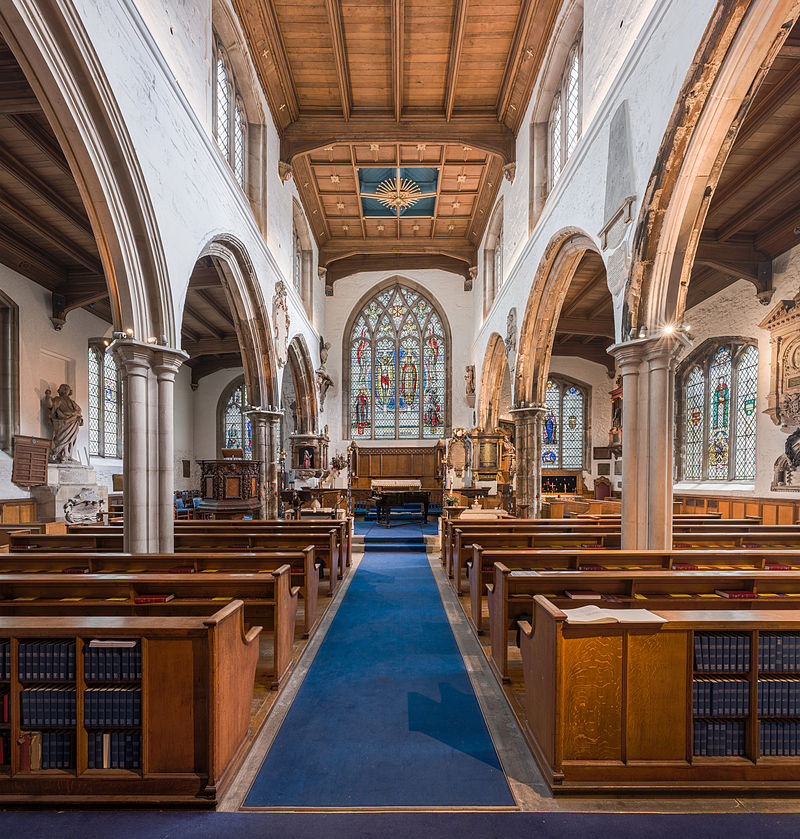
So, to help us in our mutual interest, I've started another study. Richard's uncle Edward Bennett, who lived in Virginia for a year only after his two brothers died, returned to England once his nephew, the 21 year-old Richard, was ready to assume the duties of managing Edward's business interests in Virginia. Edward was married to Mary Bourne, also of Somerset, whose father, Jasper Bourne a well-to-do business man, had moved to London. Jasper's will mentions the Bennett brothers John (the older who had married Jasper's daughter Elizabeth) and Edward Bennett who had married Elizabeth's sister Mary. I haven't been able to pick up John's trail, but the majority of Edward's children's baptisms appear in the parish records of St Olave, Hart St, London. St Olave (St Olaf) is one of the oldest churches in London, and the smallest. It's near the Thames River and had the great fortune of surviving the Great London Fire of 1666 — by a mere 100 feet, thanks to a shift in the wind. We're lucky, then, that its records still exist.
Edward already had four older children baptized at London churches, St Dunstan in the East and St Bartholomew by the Exchange. Whether he moved or simply changed churches, we don't know.
St. Olave Hart Street, London
| Robert Bennitt | Christening 12 April 1631 | Richard Bennitt, Jane |
| Silvester Bennitt | Christening 25 October 1630 | Edward Bennitt, Marie |
| John Bennitt | Christening 17 February 1632 | Edward Bennitt, Marie |
| Elizabeth Bennett | Christening 3 July 1633 | Thomas Bennett, Marye |
| Ann Bennett | Christening 13 March 1634 | Edwarde Bennett, Marie |
| Jasper Bennett | Christening July 1635 | Edward Bennett, Marie |
| Thomas Bennett | Christening 21 October 1652 | Thomas Bennett, Alice |
| William Bennett | Christening 14 February 1654 | Thomas Bennett, Alice |
| Marie Bennitt | Christening 15 October 1655 | Thomas Bennitt, Alice |
| Richard Bennitt | Christening December 1656 | Thomas Bennitt, Alice |
| Edward Bennitt | Christening 6 May 1660 | Thomas Bennitt, Alice |
| Samuel Bennit | Christening 27 April 1662 | Thomas Bennit, Alice |
| Sarah Bennet | Christening 11 December 1687 | Edward Bennet, Elizabeth |
| Ellzabeth Bennet | Christening 20 January 1690 | Edward Bennet, Elizabeth |
| Samuell Bennett | Christening 4 December 1692 | Edward Bennett, Elizabeth |
| Mary Bennett | Christening 15 November 1695 | Edward Bennett, Elizabeth |
| Hanna Bennet | Marriage 1 August 1691 | Edward Biddell |
| Sarah Bennett | Marriage 11 February 1704 | Henry Warnes |
| Elizabeth Bennett | Marriage 8 June 1712 | Walter Griggs |
| Mary Bennett | Marriage 3 December 1730 | William Grant |
There's a lot to be unpacked here. I suspect the Thomas who married Alice was the 1620 Wiveliscombe son of Thomas, but it's early to know for sure. The second Edward is likely the son of Thomas and Alice. It should be noted, though, that "Uncle" Edward and Mary had son named Edward baptized at St Dunstan in 1623. This is a good start toward extending the family forward.
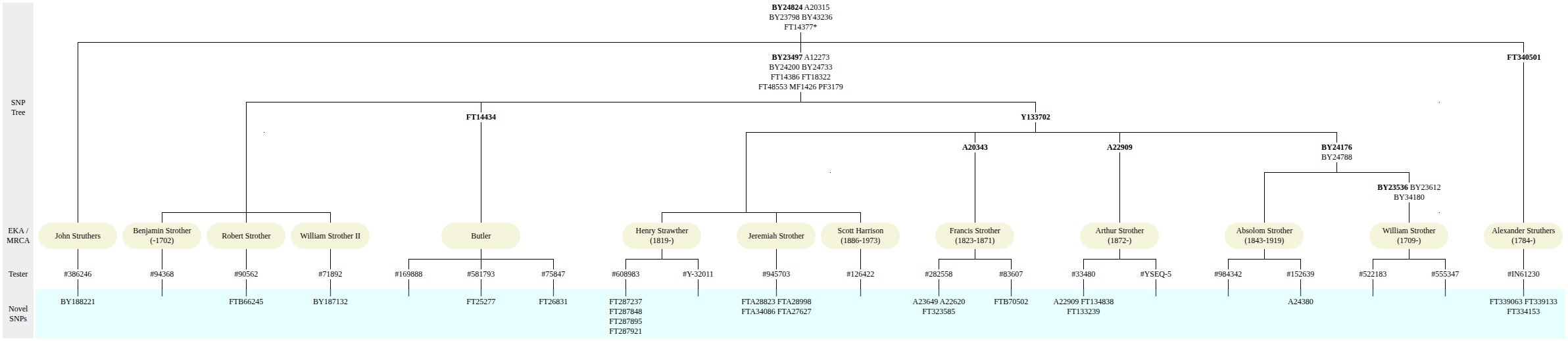
Back at home, the first object for the descendants of John Bennett is to see just how everyone connects to one another. The two Big Ys are a good start and have the potential for considerable growth. For example, I'm also working on two Pettit families that arrived a little earlier than your John and are now proven not to have been brothers, as believed for a great many decades, Thomas Pettit, 1609 and John Pettit, 1808. Here's an early American Cooley clan, not mine, descended from or otherwise related to Benjamin Cooley, 1615. And finally (for now!) for immigrant William Strother who died in Virginia in 1702.
Not long after I started working with the Blackwater Bennetts I began a Bennett DNA group on Facebook, now named for the Somerset Bennetts but that could change: Somersetshire Bennetts.
We can do this! In the meantime, I'm always happy to answer questions.